
Our schools 18 months – 5 years · Adelaide Campus
Great BeginningsMontessori School
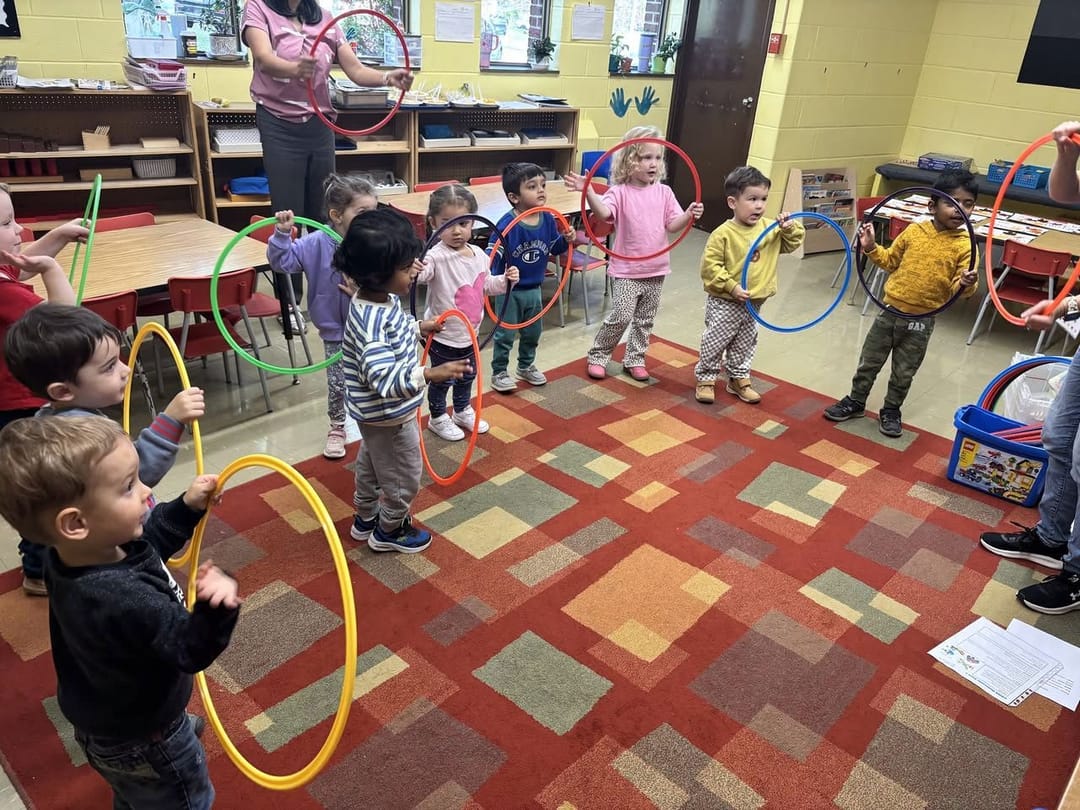
A first school for children from 18 months to five years. They choose their own work from low shelves, and a teacher shows them the next thing when they are ready for it.
- Ages
- 18 months – 5 years
- Classes
- Pre-Casa and Casa
- Campus
- 505 Adelaide Ave E
- Full day
- 8:45 – 3:30
The Montessori approach
How a Montessoriclassroom works
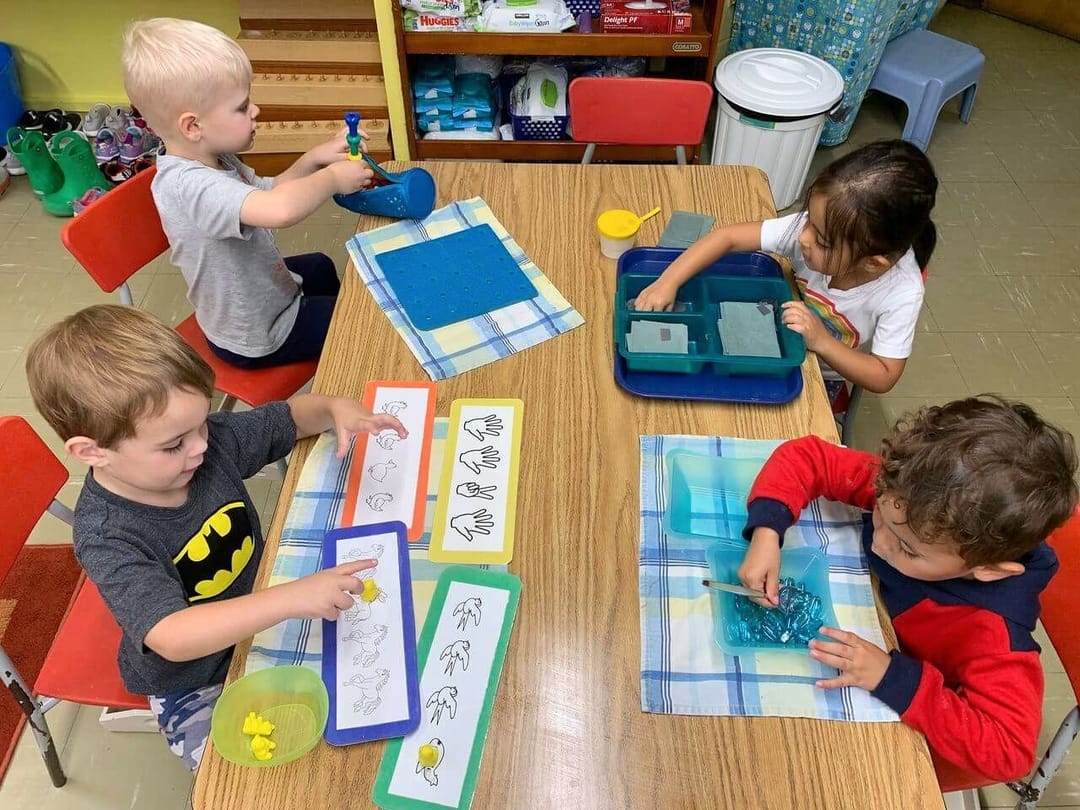
The room is prepared before the children arrive: materials set out on open shelves, tables and chairs at their height. Within a few clear ground rules, each child decides what to work on and for how long.
-
The teacher watches first
Teachers notice what each child is drawn to and how far they have got, and introduce a new material when the child is ready for it. A child may repeat an activity as often as they like, until it comes easily.
-
Freedom, with ground rules
Choosing your own work comes with a few rules the whole class keeps: respect for one another, for the materials and for the room.
-
Alone, and alongside others
Children work by themselves or with a partner. In a class of mixed abilities, watching another child and helping one are both ways of learning.
Three stagesbefore Grade 1
Children can start in any of the three. Placement depends on age and readiness, and is agreed with the family after a visit.
-
18 months to 3 years
Pre-Casa
A first classroom
The toddler class. Familiar routines and hands-on activities introduce Montessori gently, alongside play that follows the children’s own interests. Music, movement and library sessions bring variety to the week.
- A daily journal for families
- Two progress reports a year
- Meals and snacks at school
-
Age 3
Casa 1
More choice, and French
Casa 1 keeps the play that grows from children’s interests and adds a fuller introduction to the Montessori materials. French begins here, taught through songs, drama and movement, along with music and physical education.
- Three report cards a year
- Two parent interviews
- Meals and snacks at school
-
After Casa 1, to age 5
Casa 2 & 3
Working independently
Children choose their work within the shared ground rules of the classroom. The Montessori materials carry them into language, mathematics and discovery, with time working alone balanced against time in a group.
- New work introduced at each child’s pace
- A science fair shared with Grades 1 to 4
- French, music and physical education
What childrenwork on
In a Montessori classroom a child’s chosen activity is called work. It falls into six areas.
-
Working with the materials
Children handle the materials and explore through their senses. The teacher presents an activity, then steps back so the child can practise at an individual pace.
-
Language and early mathematics
Both begin with things a child can hold and count. Children come back to familiar activities and move on to new ones as their understanding grows.
-
Discovery and culture
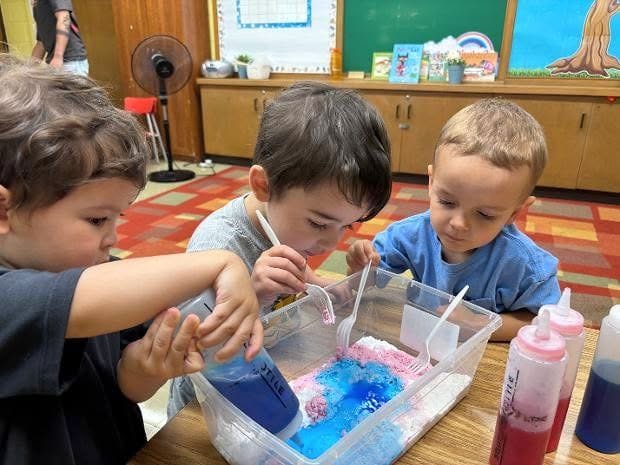
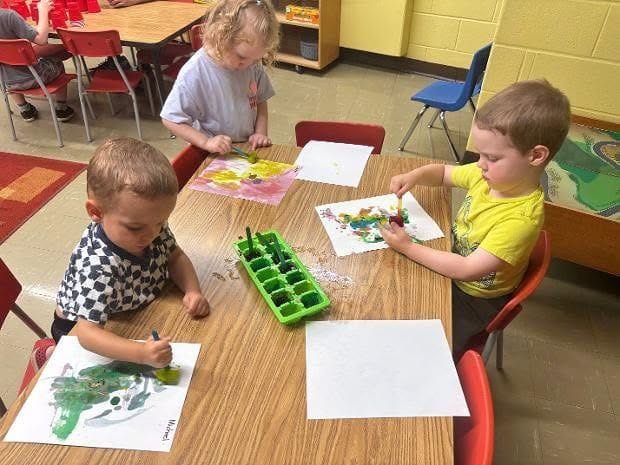
Science, history, geography, art and music give curiosity several places to start. From Casa 2, children present a project of their own at the science fair.
-
French, music and movement
French starts in Casa 1, through songs, drama, music and movement. Music and physical education are taught by specialists; the French teacher and the music director teach across all three of our schools.
-
Choice within shared routines
Children pick their activities inside ground rules suited to their age. Respect for one another and for the room is what makes independent work possible.
-
Learning with other children
A class of mixed abilities gives each child someone to watch, someone to help and someone to learn from.
A day atGreat Beginnings
Hours for the 2026–27 school year. Care before and after school is billed separately from tuition.
-
Before-school care
For families who need an earlier start. Care is billed by the quarter-hour.
-
Arrival
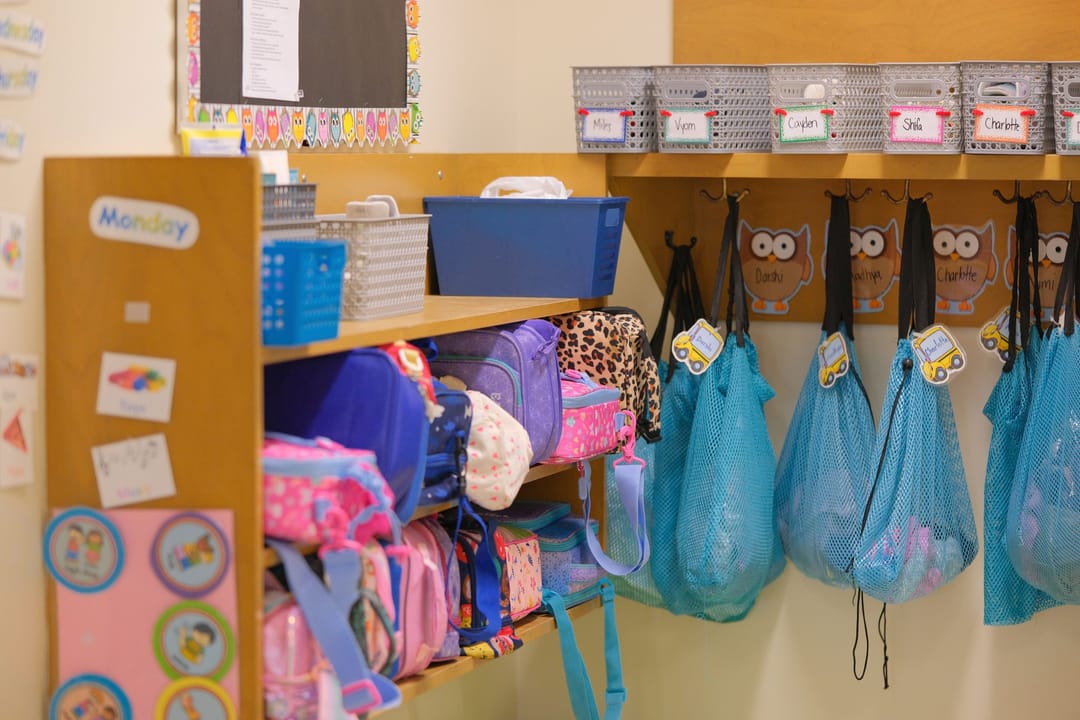
Drop-off for half-day and full-day children. Bags go on their hooks and the morning’s work begins.
-
Half-day pick-up
Children enrolled for half days go home.
-
Full-day pick-up
Children enrolled for the full day go home.
-
After-school care
Children who stay on are looked after at school until six.
Rooms sized forsmall children
Great Beginnings is at the Adelaide Campus, which it shares with Grades 1 to 4 of Durham Elementary. Select a photograph to see it larger.
Recognition
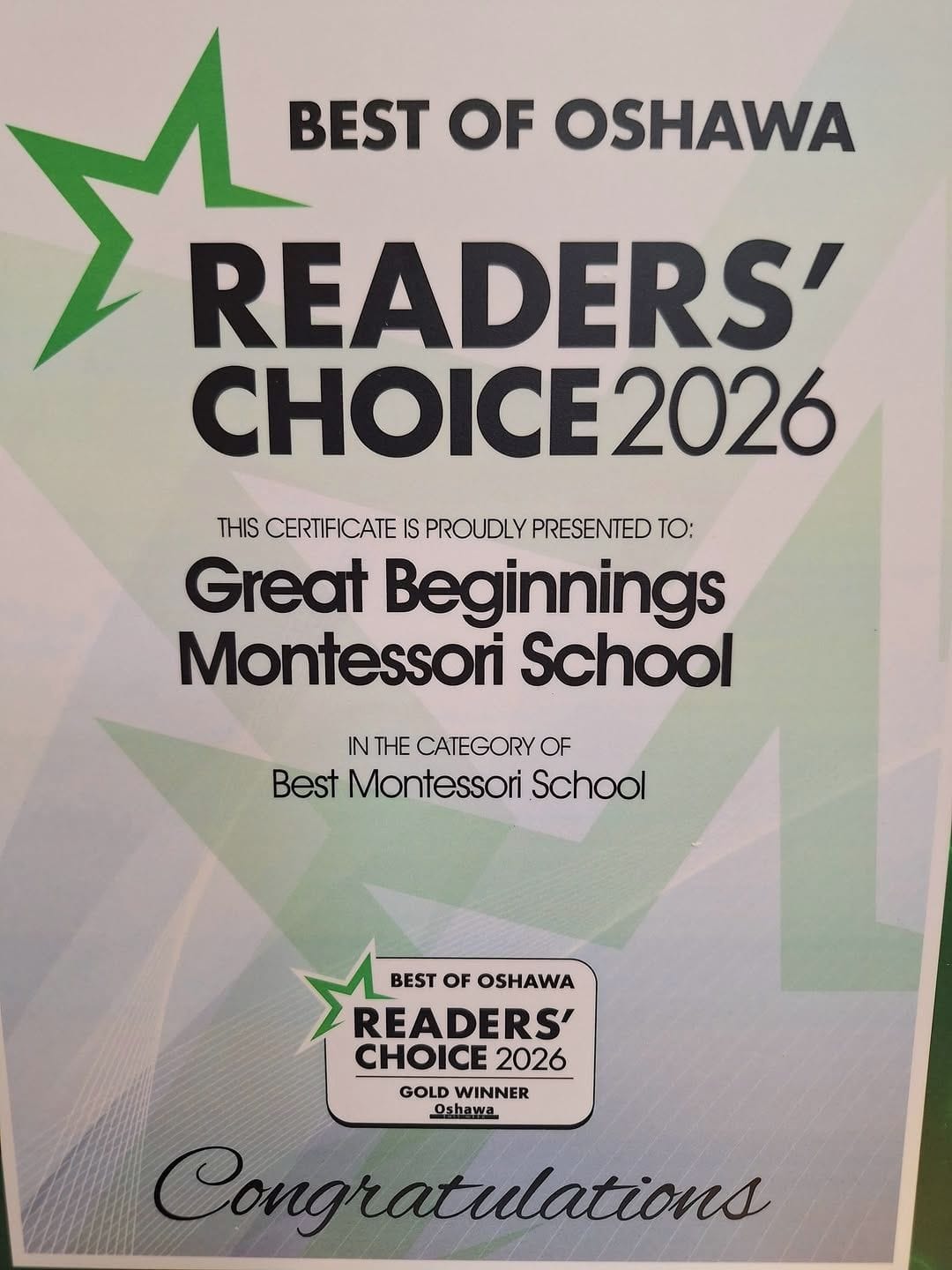
Best of Oshawa Readers’ Choice 2026 named Great Beginnings its Gold Winner in the Best Montessori School category.
Read the storyQuestions parentsask first
At what age can a child start?
From 18 months. Pre-Casa takes children from 18 months to three, Casa 1 is the class for three-year-olds, and Casa 2 and 3 follow, up to age five. Children can join at any of these stages.
How will we know how our child is getting on?
Pre-Casa families receive a daily journal and two progress reports a year. Casa 1 has three report cards and two parent interviews. Parents can also arrange to speak with their child’s teacher.
Do children learn French?
Yes, from Casa 1. French is taught through songs, drama, music and movement, by the French teacher who also teaches in the elementary and secondary schools.
What are the school hours?
Arrival is between 8:45 and 9:00 a.m. Half-day children are collected at 11:45 a.m. and full-day children at 3:30 p.m. Care runs from 7:00 a.m. before school and until 6:00 p.m. after it, billed separately.
What does it cost?
For 2026–27, five full days a week is CAD 1,300 a month in Pre-Casa and Casa 1, and CAD 1,085 a month in Casa 2 and 3, paid in ten monthly instalments from September to June. Materials, meals and other fees are set out on the tuition page.
Where do children go after Casa?
Children can move on to Grade 1 at Durham Elementary, whose Grades 1 to 4 are on the same campus.
How to arrangea visit
Great Beginnings is at the Adelaide Campus: 505 Adelaide Ave E, Oshawa.
-
Call or write
Tell us your child’s age and when you would like to start. The school office is on +1 (905) 432-1400, or at gbms@ymail.com.
-
Visit the classroom
Meet the teachers, see the room your child would join and ask about routines, meals, rest and settling in.
-
Confirm the place
We agree the class and start date with you, and go through the fees before enrolment is complete.
Come and seethe school
Tell us your child’s age or grade and what you would like to know. Families nearby can arrange a visit to either campus; families overseas can begin with an email.
- Montessori & elementary
- +1 (905) 432-1400
- Secondary school
- +1 (905) 240-2501
- International students
- international@durhaminternational.ca