Durham International Education Group

Our schools Grades 9–12 · King Campus

Durham AcademySecondary School

A small Ontario high school in Oshawa. Teachers know every student by name, courses lead to the Ontario Secondary School Diploma, and planning for university begins in Grade 9.

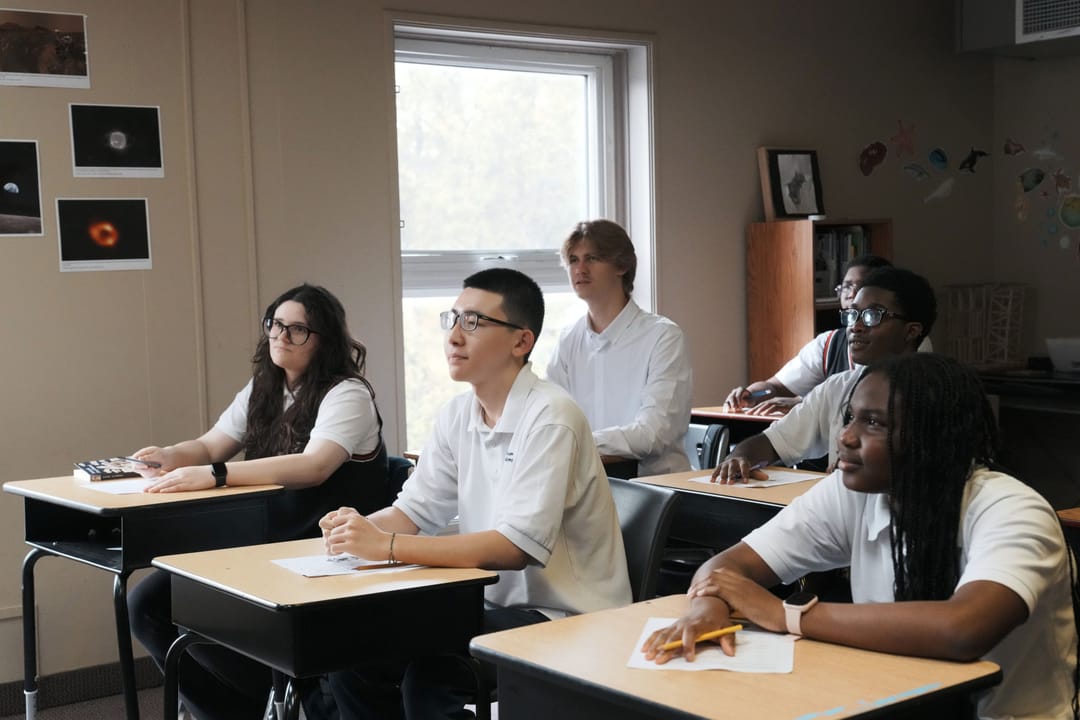
Secondary students in white school polos listen at their desks beside a classroom window
A science lesson. Secondary students at the King Campus.
Grades
9 – 12
Diploma
OSSD · 30 credits
School day
8:45 – 3:45
Campus
900 King St E

Every studentknown by name

Durham Academy is a small secondary school on King Street East. It welcomed its first students in 2017, alongside an elementary school and a Montessori school that have taught in Oshawa for four decades. All three share one principal, Mrs. Mason.

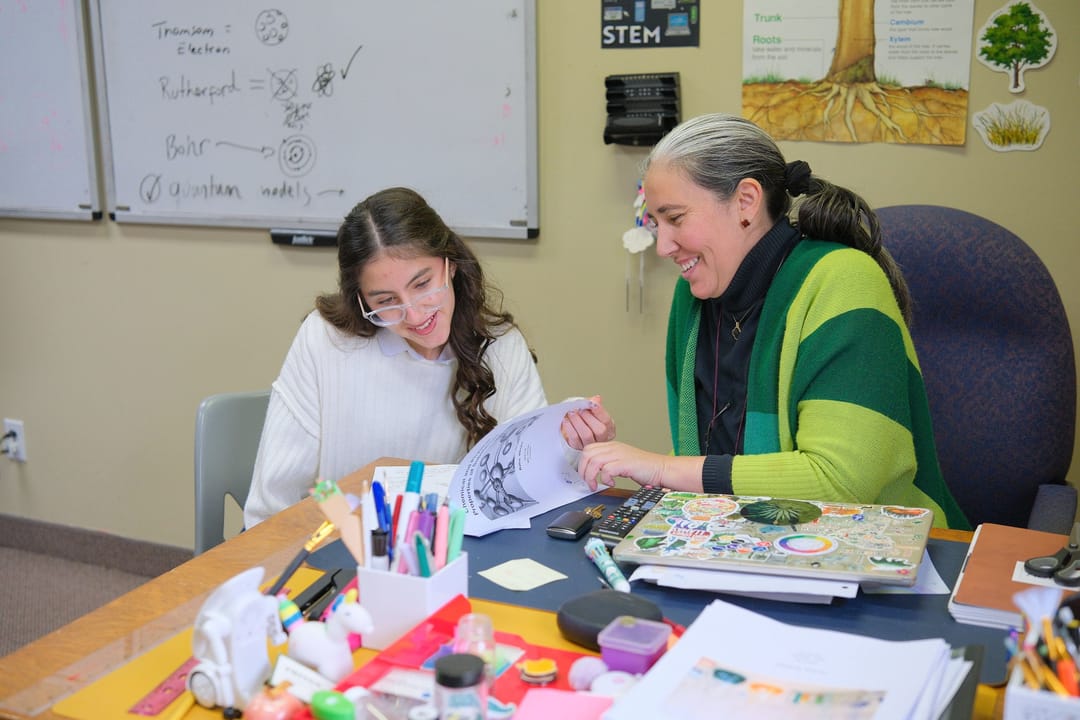
A science teacher and a student in glasses laugh together over a handout at the teacher’s desk
One to one. A science teacher goes through a handout on molecular structure with a student.

Some students have been with her since they were three. Others arrive in Grade 9, or part-way through high school, from other Ontario schools and from abroad: China, Korea, Nigeria, Vietnam, Brazil, Germany, Ukraine and Poland among them. Local and international students sit in the same classes.

Classes are small, and lessons follow the Ontario curriculum at the academic level, with particular weight on science, technology and mathematics. Alongside the subjects, students practise what university will ask of them: taking notes, researching a question, writing an academic essay and presenting to a room.

Mrs. Mason is plain about whom she hires. “They can look good on paper,” she says, “but I’m looking for someone who does not shout or disrespect a student ever. I’m not looking for them to be their best friend either, but I’m looking for someone who truly cares about each individual child.”

In class, says Mr. Doyle, the guidance counsellor, “questions are welcomed and mistakes are viewed as learning opportunities.”

School day
8:45 a.m. to 3:45 p.m., in two terms
Joining
Any grade from 9 to 12, in September or during the year
After school
A free math club, run by the specialist math teacher
Home and school
Messages from teachers through the week, midterm reports and report cards, and parent–teacher interviews in person, by phone or online
Principal
Mrs. Mason, with Durham since 1999

“Everyone knows everyone by name. My staff are aware of everybody’s background, their strengths, and where they might need some help.”

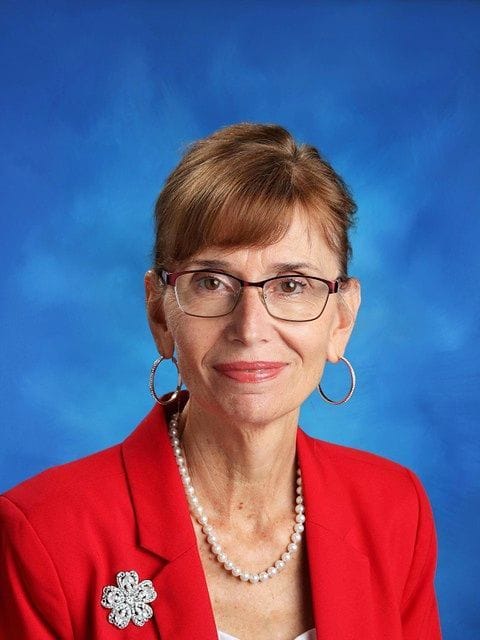
Portrait of Mrs. Mason
Mrs. Mason Principal of all three schools

The Ontario diploma

Thirty creditsover four years

The Ontario Secondary School Diploma, the OSSD, is what a student in this province graduates with at the end of Grade 12. It is the diploma Canadian universities admit on, and every high school in Ontario teaches toward it under the same provincial rules.

30 credits to graduate

A credit is earned by passing one course. A student needs thirty of them, which works out at seven or eight courses a year. Some are compulsory and the rest are chosen, and the exact split depends on the year the student started Grade 9.

Year the student started Grade 9
  • 1718 compulsory
  • 1312 optional

Point to a subject to find its squares.

For students who started Grade 9 in 2024 or later

Compulsory credits

17
  • English One in each grade 4 credits
  • Mathematics At least one in Grade 11 or 12 3 credits
  • Science 2 credits
  • Canadian history 1 credits
  • Canadian geography 1 credits
  • The arts 1 credits
  • Health and physical education 1 credits
  • French as a second language 1 credits
  • Career studies 0.5 credits
  • Civics and citizenship 0.5 credits
  • Technological education In Grade 9 or 10 1 credits
  • One more STEM-related course Business, computer studies, co-operative education, or a further course in mathematics, science or technology 1 credits

Optional credits

13

Chosen with Mr. Doyle, to suit the student’s interests and the prerequisites of the university programs in view.

Diploma total 30 credits

For students who started Grade 9 in 2023 or earlier

Compulsory credits

18
  • English One in each grade 4 credits
  • Mathematics At least one in Grade 11 or 12 3 credits
  • Science 2 credits
  • Canadian history 1 credits
  • Canadian geography 1 credits
  • The arts 1 credits
  • Health and physical education 1 credits
  • French as a second language 1 credits
  • Career studies 0.5 credits
  • Civics and citizenship 0.5 credits
  • Three further credits One from each of three subject groups set by the province 3 credits

Optional credits

12

Chosen with Mr. Doyle, to suit the student’s interests and the prerequisites of the university programs in view.

Diploma total 30 credits

Besides the credits

  • 40 hours

    Community involvement

    Volunteer work outside lesson time. Mr. Doyle explains which activities count and helps students keep the record.

  • OSSLT

    The literacy requirement

    Most students meet it by passing the Ontario Secondary School Literacy Test, a provincial test of reading and writing. It is separate from IELTS.

  • 2 credits

    Online learning

    Two of the thirty credits are taken as online courses. A student can be exempted or opt out, and the school explains how.

  • 70%

    Financial literacy

    New from 2026–27, for students who started Grade 9 in 2025–26 or later: the financial literacy modules in Grade 10 Career Studies must be passed with at least 70%.

Coming from another school system

Credits do not transfer automatically. The principal reviews the student’s transcripts, decides which Ontario credits they are equivalent to, and sets out what is still to do, community involvement and online learning included.

Durham Academy is listed in Ontario’s private school directory (school no. 880448) and offers credits toward the diploma.

Ontario’s official graduation requirements

University guidance

From first timetableto final application

Mr. Doyle, the guidance counsellor, meets each student one to one. What they decide is shared with the family at every stage.

  1. Grade 9

    Find a direction

    A first conversation about the subjects a student enjoys and what they have studied so far. Out of it comes a course plan for each term, agreed with the student and then with the parents.

  2. Grade 10

    Choose with a purpose

    University programs ask for particular Grade 11 and 12 courses. Mr. Doyle sets those prerequisites beside the student’s choices, so that the options they care about stay open.

  3. Grade 11

    Research programs

    Students compare universities, colleges and programs, and what each one requires. University representatives visit the school to talk about their programs and about course choices.

  4. Grade 12

    Apply

    Applications, deadlines and scholarship forms are worked through together, and parents are kept in the conversation until the decisions are made.

A bearded teacher in a checked shirt, seen in profile, in the middle of a conversation
Mr. Doyle. Guidance counsellor at Durham Academy, and Grade 8 teacher at Durham Elementary.

“I directly support students through one-on-one sessions, looking at their academic pathways and where they want to go in terms of high school and the next stage.”

Mr. Doyle, guidance counsellor

Mr. Doyle also teaches Grade 8 at Durham Elementary, so students who come up from the elementary school already know him when they start Grade 9. His work, as he describes it, is helping students understand prerequisites, explore the paths open after high school and choose courses that fit their interests and goals.

The connection outlasts graduation. Graduates now at university, says Mrs. Mason, “like to come and visit us during their reading week and spend time with us and our teachers. And sometimes they even mentor some of our younger students.”

One student’s story

Two marks short

Mrs. Mason tells the story of a student from Poland who wanted to study at the University of Waterloo. With the application approaching, the student’s average was two marks below what the program asked for.

A teacher began working with the student every morning and every afternoon. The marks rose. The offer from Waterloo came, and a scholarship came with it.

When Mrs. Mason tells it, the story is about the teacher.

As told by Mrs. Mason, Principal

Universities students look at

Universities our guidance counsellor helps students research and apply to

School life

Basketball in the gym,a climbing wall in October

The King Campus has its own gymnasium and a lounge for students. Around the lessons there are clubs, an annual science fair and trips out of the classroom.

More from the school journal
A student in a crested vest and tie kneels beside a white humanoid robot, holding a laptop that shows its camera feed
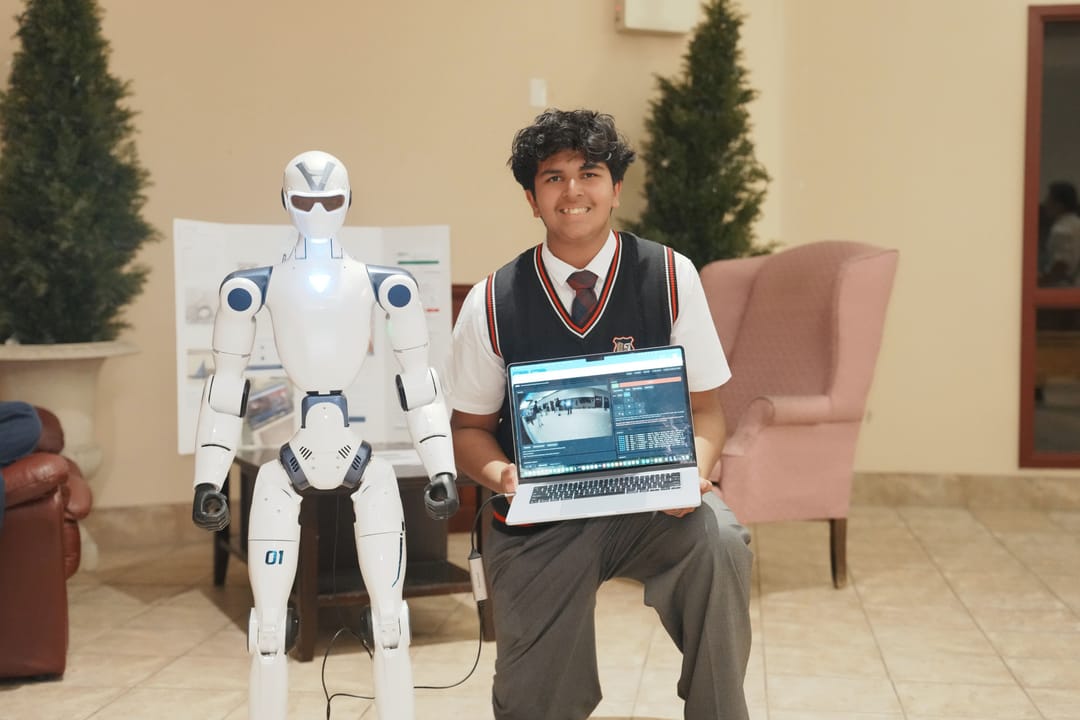
A robot in the lobby. A student shows what the humanoid robot’s camera sees, live on his laptop.
Two secondary students in climbing harnesses give a double thumbs-up in front of a colourful climbing wall
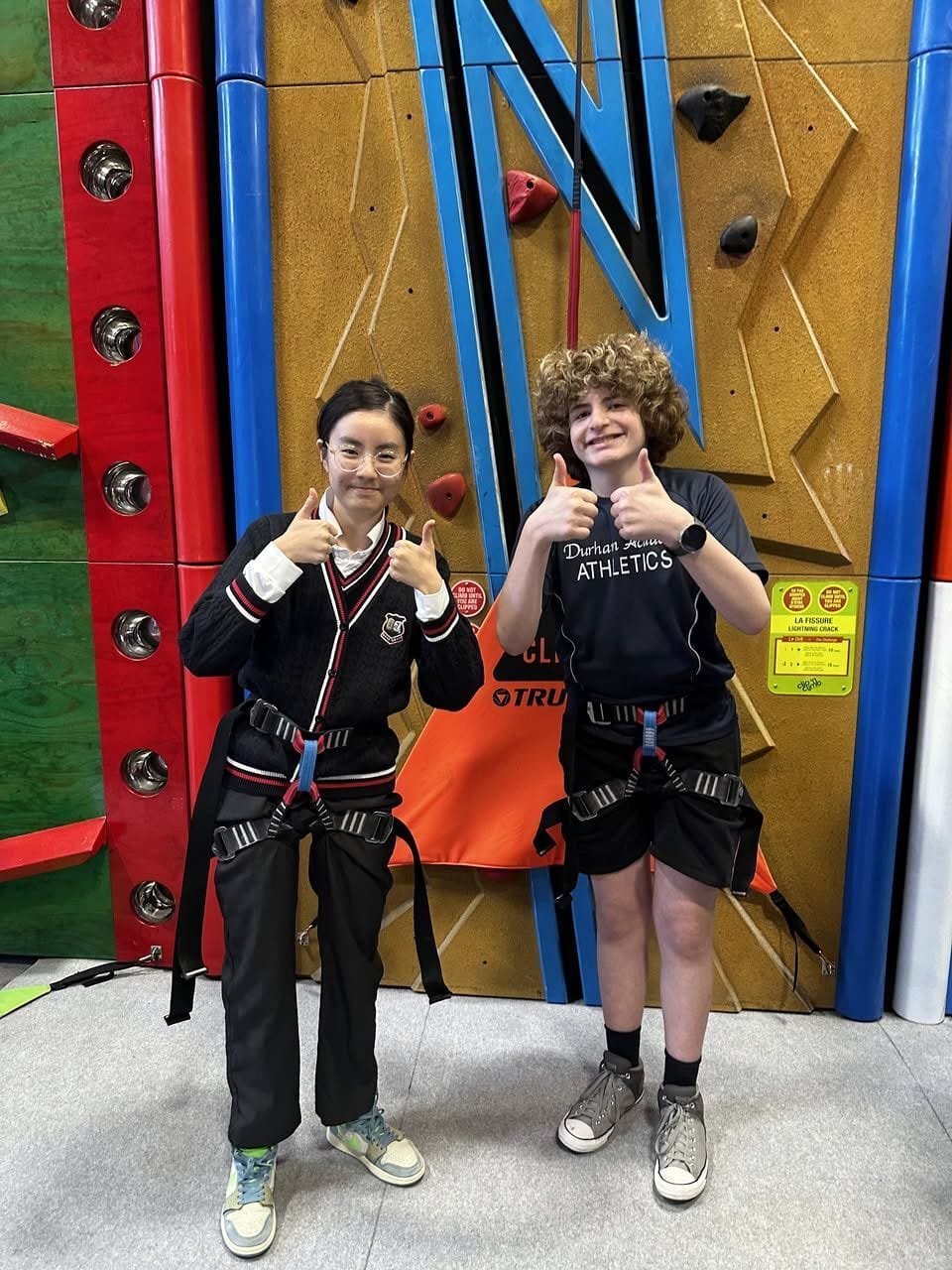
Rock climbing. Harnesses on, thumbs up.
Two secondary students in uniform play one-on-one basketball below the hoop in the school gym
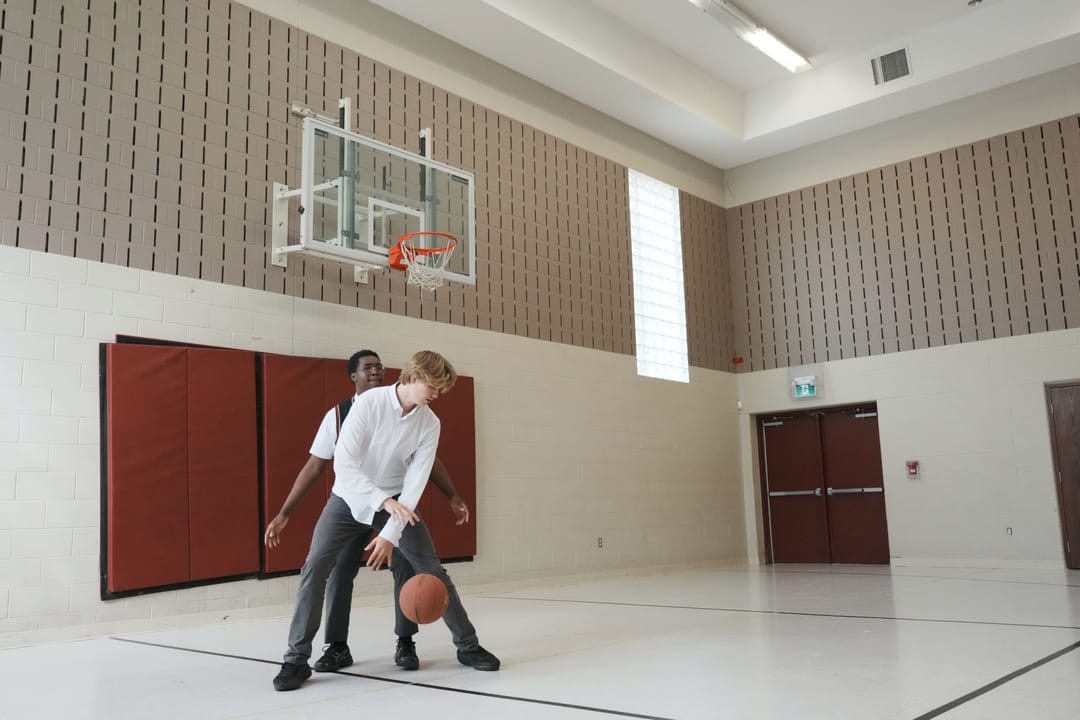
In the gym. One on one under the hoop.
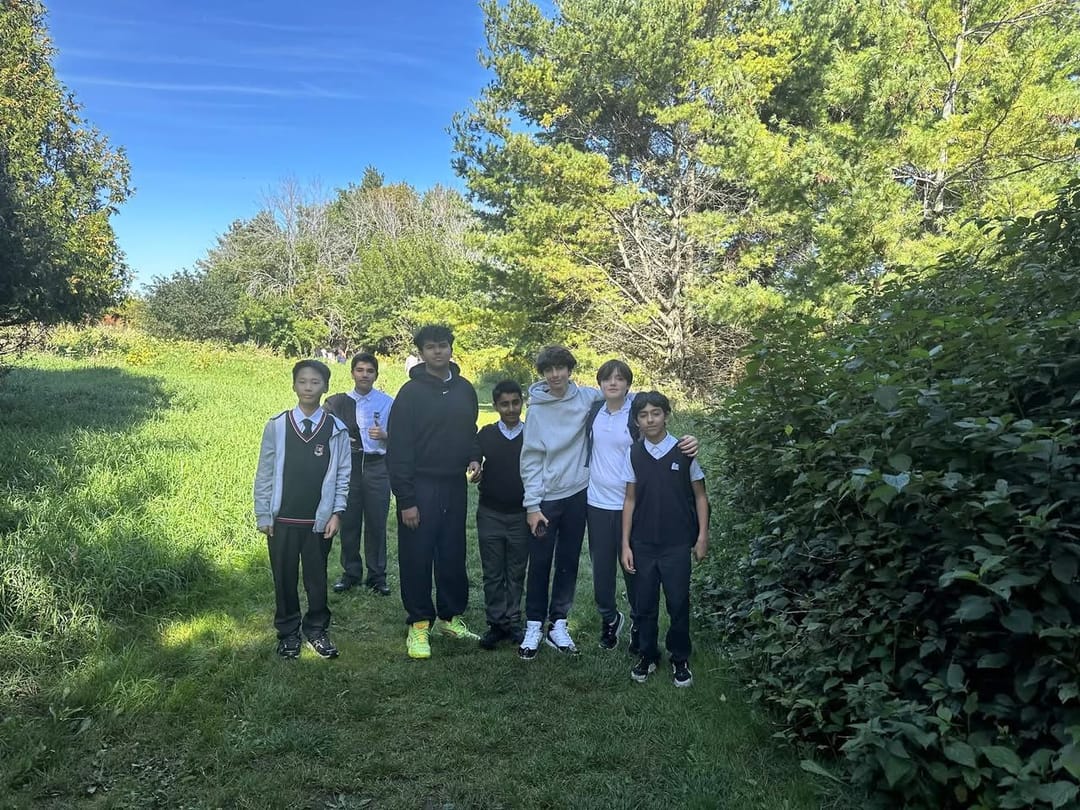
Seven secondary students stand arm in arm on a grassy path between tall shrubs under a blue sky
Second Marsh. Grades 9 and 10 on the trail to the lake.
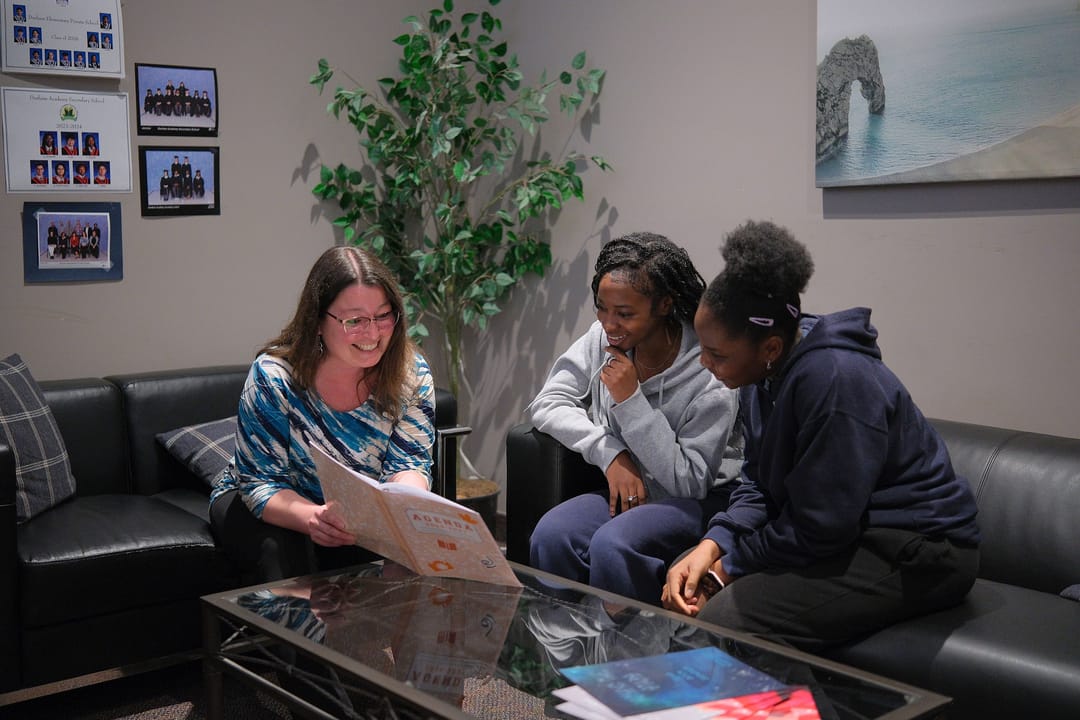
A counsellor on a black sofa looks through a booklet with two secondary students, class photographs on the wall behind
The lounge. A counsellor looks through the school agenda with two students.
  • Sport

    Physical education is part of the timetable, and the King Campus has a full gymnasium. Basketball, soccer, badminton, volleyball and floor hockey are the school’s sports.

  • Clubs

    A debate club brings together students from Grades 6 to 11, and the specialist math teacher runs a free math club after school. Once a year, Grades 5 to 12 present their projects at the science fair, with models, display boards, 3D printers and robots.

  • The lounge

    The student lounge has black sofas, a fig tree and each graduating class in a frame on the wall. It is a place to sit between lessons, and to talk something through with a counsellor.

  • Trips

    In September, Grades 9 and 10 went to Second Marsh to study plants, wildlife and the rocks along the shore for science and art. In October, after a week of tests and projects, secondary students went rock climbing.

Admissions

Four steps tothe first day

Students join in any grade from 9 to 12, in September or during the year. It starts with a conversation.

Tuition for 2026–27 is CAD 12,000 for the year. International students receive a separate written quotation.

International admissions
  1. Tell us about the student

    Current grade, schooling so far, interests, and when you hope to start. Families nearby can arrange a visit to the King Campus; families overseas can begin with an email.

  2. Send school records

    Recent report cards and transcripts. The principal reviews them and decides which Ontario credits the student has already earned, and the school assesses the student’s level of English.

  3. Agree a course plan

    The school talks with the student, then with the family, and sets out the courses for each term for both to approve. A prospective student is welcome to spend a day in class first.

  4. Enrol

    Once a place is confirmed, the school office takes the family through enrolment, fees and uniform before the first day.

Questionsparents ask

Can a student join part-way through high school, or from another country’s system?

Yes. Students join in any grade from 9 to 12, and during the year as well as in September. Credits from another system do not transfer automatically: the principal reviews the transcripts, decides which Ontario credits have been earned and which remain, and a course plan is agreed with the student and the family.

Does the diploma replace IELTS?

They are separate things. The diploma has its own literacy requirement, a provincial test of reading and writing. Universities set their own English-language rules, and holding the diploma does not by itself exempt a student from them. Mr. Doyle checks the requirement of each university with the student.

What if a student is still learning English?

When a new student arrives, the school assesses their English and plans support from there, including help with conversation and writing and extra tutoring in their subjects.

How will we know how our child is doing?

Teachers write to parents through the week. There are midterm reports and report cards, and parent–teacher interviews can be held in person, by phone or online. For families overseas, Linda in international student services keeps parents up to date.

What do students do for lunch?

Students can bring food from home, their homestay or the residence, and every classroom has a microwave. An outside lunch service also delivers five days a week, with Canadian, Italian, Chinese, Korean and Japanese meals from a caterer and local restaurants.

Where do international students live?

The school has a student residence in Oshawa, close to the campus, for international students in Grade 8 and above. See the student residence and international admissions pages.

What does it cost?

Tuition for 2026–27 is CAD 12,000 for the year; the administrative and materials fees are listed with it on the tuition and fees page. International families are sent a written quotation covering tuition, accommodation, insurance, uniform and any transport.

Can we visit before deciding?

Yes. Mrs. Mason shows families round the school herself, and a prospective student can spend a day in class with the grade they would join. Arrange a visit.

Come and seethe school

Tell us your child’s age or grade and what you would like to know. Families nearby can arrange a visit to either campus; families overseas can begin with an email.

Montessori & elementary
+1 (905) 432-1400
Secondary school
+1 (905) 240-2501
International students
international@durhaminternational.ca